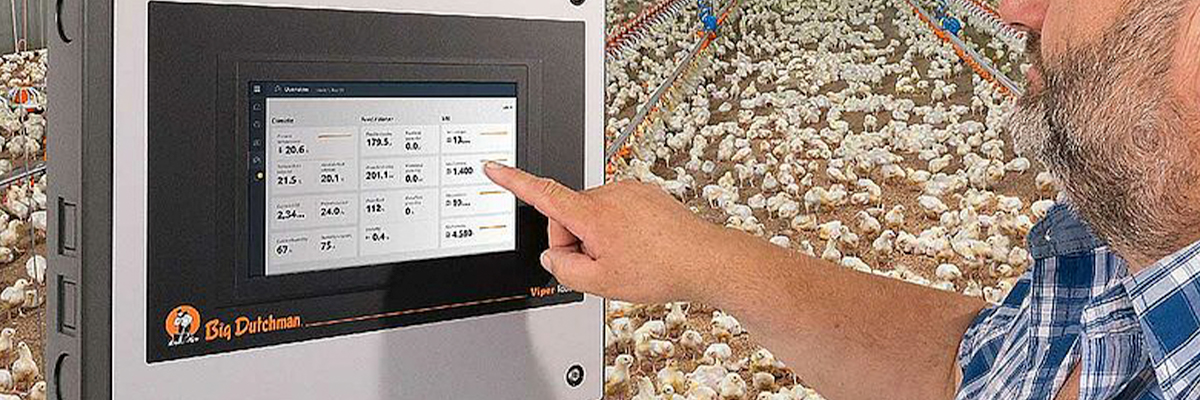
Keeping chickens healthy and happy is key to any broiler farm’s profitability. Big Dutchman’s experience with Southern African broiler chicken farmers since 1966 has ensured a wealth of local experience that we provide to our clients from broiler farm objective setting to ongoing broiler farm support.
“In any farm, feed conversion and animal productivity is the holy grail for farm profitability.” Says xxx “and animal stress plays an enormous role in this equation.” He says. “Keeping ammonia levels as low a possible removes the risk of a variety of stress factors from the broiler house.”
Veterinarian studies on the effect of ammonia on broiler chickens suggest that unhealthy ammonia levels results in a decrease in breast and thigh muscle yield and an increase in un healthy kidney and hepatic conditions as well as a decreased immune system – Read more here.
Big Dutchman has 3 helpful tips for farmers to implement to reduce ammonia levels in your broiler houses:
Big Dutchman Tip #1: Ventilation Control Keeps Broiler Houses Dryer
Ensuring your broiler house has enough ventilation to remove toxic levels of ammonia is critical to the health and wellness of your flock. Ventilation, like everything in broiler farming, is a fine balance because too much air from the outside can change the temperature of the house, resulting in increased energy expenditure for cooling or heating the house. In addition, air from outside the house can carry dust and other particles that adversely affect the birds.
So, what is the solution to the ventilation problem?
Big Dutchman’s exhaust chimneys, which were invented to optimise the air exchange in livestock houses and can include measurement devices that provide farmers with exact readings on ammonia levels. This critical information enables farmers to make smaller ventilation adjustments that protect the energy efficiency of the broiler house.
Big Dutchman exhaust chimneys also include a variety of farm centric innovations that increase the efficiencies of ammonia removal, reduce energy consumption, can be retrofitted to current houses and are winter and weather resistant.
For more information contact the Big Dutchman team here.
Big Dutchman Tip #2: Residue Removal Reduces Broiler House Ammonia Levels
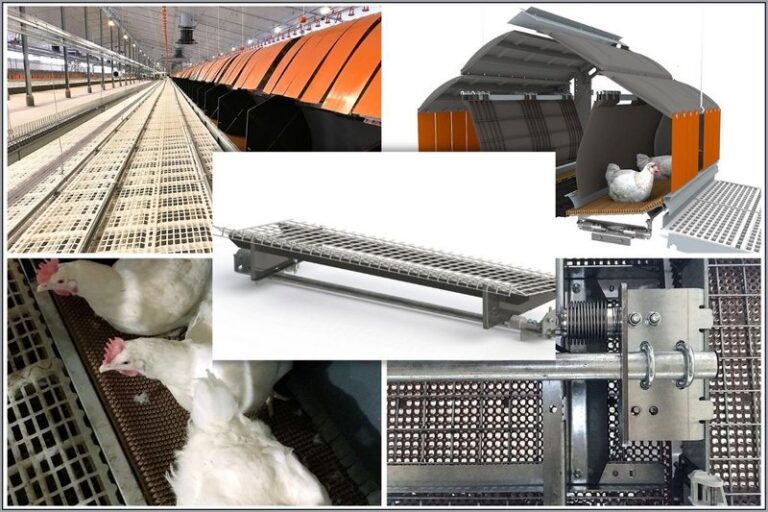
Most broiler houses have a manure pit below the birds with manual removal of the manure by staff. As a result, managing ammonia levels in broiler houses can be incredibly difficult, but not with Big Dutchman’s residue management systems.
Big Dutchman’s residue conveyor belts remove manure at farm set intervals and can automatically transport it to a residue treatment system at the farm. This not only removes one of the key production aspects of ammonia but also provides farmers with a valuable bi-product of broiler farming that can either be used to fertilise crops or sold to surrounding farmers.
Find out more about the Big Dutchman residue treatment systems by contacting our team. – Read more about our Broilers here.
Big Dutchman Tip #3: Water Management reduces Broiler House Moisture
In an interesting study on the affect of PH, temperature and moisture on ammonia release found that increased levels of PH, temperature and moisture in broiler houses resulted in an increase in ammonia release -Read more here.
Big Dutchman broiler houses fitted with the Big Dutchman water delivery system can include a drip cup that reduces the amount of moisture dripping through to the manure. This in turn reduces the reaction between excess water and ammonia, which reduces ammonium hydroxide, a dangerous bi-product of ammonia, which can lead to an increase in bird fatalities.
For more information on how Big Dutchman’s water delivery solutions assists in the health and well being of broiler poultry, click here.
In short, managing ammonia levels within your broiler houses is a critical factor for the long-term success and profitability of your farm. Big Dutchman has applied years of hard won local and international broiler farm experience to provide you with the very best solutions to reducing ammonia in your broiler houses.
Get in touch with the Big Dutchman team for retrofitted or turnkey broiler solutions here today.